| Aug 19 |
Football: Prem 2011 Week 1A Change In The Air? So it’s all over and now it’s rearing to go again. Prem 2011 kicks off before August is even half way decent, with almost a month of the Transfer Window still to go and with many of us not having even got off on holiday, let alone got back. After last year, which really felt like the end of an era with teams basically knuckling down and trying to ‘grin and bear’ their way through the season, there’s something of a freshness to this season. The big clubs have all ‘manned up’ in every sense of the words. They’ve recruited either the top young players from the mid-table teams (see Man U’s moves for Ashley Young and Phil Jones, or Liverpool’s overspend on Jordan Henderson, Stewart Downing and Charlie Adam) or brought in top talent from abroad (see Chelsea’s move for Villas-Boas and Man City’s move for Sergio Aguero), thereby increasing the gap between the top three and the rest of the Prem and, hopefully, closing the gulf that exists between the Prem and Barcelona. Even now, it looks like being a three horse (Man U, Man City and Chelsea) race for the title, with one of a second tier (Arsenal, Liverpool and Spurs) rounding out the Big Four and providing a few interesting title challenging moments before they fade in February. The rest are already fighting for mid-table mediocrity or relegation, with little hope for anything other than a decent cup run to keep them excited. What’s New Pussycat? Still, it feels fresh. Certainly fresher than it did last year. Based on their Charity Shield performance, Man U look to have massively improved, while City still look powerful until they get to the final third. Man U’s gamble that Cleverly, Welbeck and Young will cover for the loss or decline of Scholes and Giggs looks to be a decent one, while City’s purchase of Aguero should liven things up a little bit. Chelsea have made Villas-Boas their big transfer (to complement the arrival of Torres in January) and it will be interesting to see if he can get things firing again. Down among the second string, Liverpool have simply gone mad, bought anyone who was British and are now trying to force them into a coherent team. Their journey this season should be exciting, if unsuccessful. They’ve got a bargain in Dirty Suarez, have massively overpaid for Carroll, Henderson and Downing and could have a Junior Xabi Alonso in Charlie Adam. All bar Henderson look promising, and while they’ll need time to gel, Liverpool haven’t got anything else to worry about this season. Having lost half their midfield already, Arsenal are fast becoming the elite teams’ favourite feeder club (with Adebeyor, Touré and Clichy, that’s almost £50 million from Man City alone in three years). This season they are either imploding or rebuilding depending on how optimistic you feel. They face a tough, tough season. So far Wenger’s additions to the squad all reek of potential without experience (Jenkinson, Oxlade-Chamberlain and Gervinho have zero minutes Premier League experience between them) or are equally raw graduates from the Academy team (Frimpong and Miyaichi), another dose of ‘jam tomorrow’ for the fans. None seem to address the critical flaws that exist in the team’s defence or bring in the experience or mental toughness needed to complement the team’s skills or even boost supporter morale. It says a lot about Arsenal’s outlook that Man U can spend £17 million on Jones, who will realistically be their fourth choice central defender, and Liverpool can spend £20 million on Henderson, who is essentially their choice of replacement for Steven Gerrard, while Arsenal haven’t spent that much on anyone, ever. Still a team whose spine consists of Szczesny, Vermaelen, Wilshire, Ramsey and van Persie should be strong enough to challenge for something. Spurs, meanwhile, have also been quiet in the markets, shipping off some of their flabby underbelly (£3.5 million for Robbie Keane to LA Galaxy is excellent business), while trying desperately to stop Chelsea taking Luka Modric. Their problem this season will be goals. The addition of Van der Vaart last season upset the balance of the side and while he was successful, the tactical shift he introduced crippled Defoe, Crouch and Pavlyuchenko. They either need to adapt to accommodate both or buy a new, more effective striker. All the rest of the teams have either been pillaged or are struggling to keep up. Aston Villa, the top teams’ second favourite feeder club, must hate the Transfer Window. In the last three years they’ve lost Barry, Milner, Young and Downing – the best part of two midfields – to teams above them. Getting rid of Carew and hiring McLeish as your manager doesn’t really compensate. Having loaned in Welbeck last season, former Man U defender Steve Bruce seems determined to make Sunderland into Man U Old Boys by bringing in Wes Brown and O’Shea. It’s interesting because it feels like both a step down for the pair and a step up for Sunderland. Plus Ça Change, Plus C’est La Meme Chose Some things just don’t change. And Week 1 of the Prem just showed them off.
Those Games Despite all this movement, the first week’s games bar one were almost unremittingly dire. Most teams look weeks from full fitness and showed little or no invention. Spurs and Everton will be glad their match was postponed. Stoke‘s game against Chelsea was probably the pick of the stinkers. It’s no wonder people hate Stoke’s football as it mainly seems to be a mix of holding, obstruction, blatant fouling and long throw set pieces. Admittedly, manager Pulis is trying to put in a little wingplay here and there, but fundamentally his gameplan is football at its worst. I’m astonished that Huth didn’t get sent off for his persistent fouling (he didn’t even get carded). The game essentially went, Chelsea attack, threaten to score but don’t, Stoke foul their way to Chelsea’s half hoping for some set piece action or a throw-in. Repulsive. Newcastle‘s match with Arsenal wasn’t any better. Newcastle seem to be living on violence and anger alone, while Arsenal appear either incapable of learning anything or are simply incompetent. It was clear the moment the fixture was announced that the dynamic of the match would be Newcastle getting into Arsenal’s face in the hope of provoking them. Arsenal should simply have bounced the ball around like Barcelona for a few minutes and taken the sting out of the game. Instead they seem to have gleefully grabbed the opportunity to mess themselves up with both hands and collected a sending off and five yellow cards without registering a single serious shot on target. It speaks of limited on-pitch leadership. Newcastle without Nolan and Carroll are a worse side than the one that was promoted last season. Wigan and Norwich taught us nothing about their teams other than they will be there or thereabouts when the relegation dogfight comes a-calling. Liverpool just about cancelled out Sunderland (or was it the other way around). Both looked to be desperately trying to bed in their new boys with mixed results. Bar Dirty Suarez, Liverpool look to be an average side, while Sunderland seem to aspire to that level. Fulham and Villa gave a great taster for what the mid-table struggle will be all about and it wasn’t a pretty sight (although way prettier than Stoke v Chelsea). Blackburn haven’t really built on the wreckage of the squad they ended last season with and it showed. Wolves, who have done a minor bit of refacing work, came and stole the points. Although neither side looked like they would be making anything like a serious challenge. Still it wasn’t all tedium. QPR were given a lovely welcome to the Prem with a 4 – 0 thrashing by Bolton. And the scoreline by no means flatters Wanderers. QPR’s defence was catastrophic and their go-to guy, Tarabt, was played out of the game. They’ve got a lot to do if they’re not going to be relegated by February. Frankly they’ve got a lot to do before they can realistically hope to get a draw. Bolton will be happy to have got their first away win for six months. Which just leaves the Manchesters. Man U weren’t up to the level they were in the Charity Shield, which was understandable if sad, even if new goalkeeper de Gea did his best to make it 2 fuckups out of 2 in the matches he’s played. West Brom without their key striker Odemwinge were fundamentally toothless and lucky to get away with a 2 – 1 defeat. Best match of the week by a country mile was Man City v Swansea. Not simply because it was a 4 – 0 drubbing, but because Swansea played well, took the game to City and were pretty comfortable in the first half. And while they may have been caned, Swansea’s defeat is in no way comparable to that of QPR. Their keeper, Vorm, was outstanding (and at £1.5 million has a case for being the best bargain transfer of the season) and Swansea were essentially good in the first half. However, in the second half City took control of the midfield, with Ya-Ya Toure and Silva being totally dominant, confined Swansea to their own half and brought on their new boy Sergio Aguero. I’m not sure what it is with South American attackers, but there’s something about Dirty Suarez, Tevez and Aguero that seems infinitely superior to other strikers. They seem to be busy all the time, but in a positive, exciting, direct way rather than the pointless ball chasing we saw from Joe Cole on his Liverpool debut. Aguero on his debut was simply sensational, scoring two and setting up Silva for his goal with a pass rescued from halfway over the goalline that recalled Zola’s best assist for Chelsea. He didn’t stop moving and causing chaos until the end of the game. If he carries on like this, £35 million is going to look like the best transfer deal Man City have ever pulled off. And he could easily be the star of the Prem by the end of the season.
|
| Jun 21 |
What We Learned From Young Engerland vs Czech Republic (1-2)Lies, Damn Lies And Statistics While it’s undoubtedly a good thing that a bit of intellectual analysis is being applied to football, in particular the increased use of in-game/prozone style statistics to monitor a player’s activities over individual matches and seasons, there’s a danger of developing a simple set of ‘dumbed down’ numbers that are positively counterproductive. 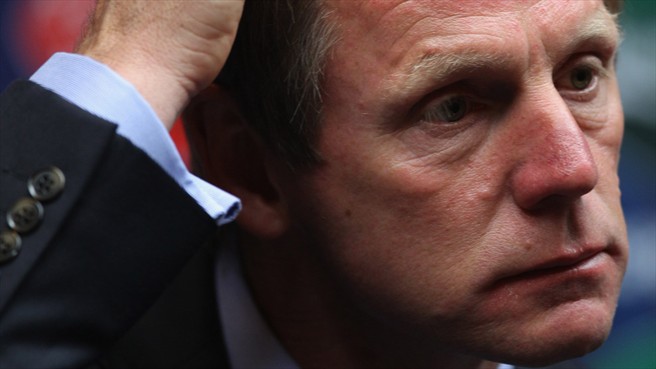 Young Engerland manager Stuart Pearce seeks inspiration as those pesky Czechs sneak another goal past his side. Take, for instance, the much over-used ‘possession’ stat. Scorelines aside, it’s close to becoming the single number that defines a team’s performance, a get out of jail free card should the team lose – ‘well, we had the bulk of possession and were unlucky to lose’ – or a great defence – ‘sure we were under the cosh, they had 75% of possession, but we battled through to a win’. But the truth is that possession is not a simple number. As has clearly been shown in this Under 21’s Championship. It ain’t how much possession you have, it’s what you do with it. It’s almost as if we should have another stat, Effective Possession. Take the Young Engerland vs Spain match, Spain had 65% or more possession, dominated the game, yet still only managed to get a draw by virtue of a deliberate handball. Hardly the stuff of dreams. So much so that it spawned Engerland manager Stuart Pearce’s comment that ‘if we had 60% of possession, we would be winning games four or five nil’, a remark that is bound to come back to haunt him, if it hasn’t already. Not least from this game, where it was Engerland who had 64% of possession, but were fundamentally unable to impose themselves on the game. Possession Is As Possession Does It all comes down to what you do with possession. The Czechs it seems were happy to give possession to Young Engerland, knowing that Young Engerland were incapable of doing anything significant with it, and for the millionth time, simply passing the ball aimlessly around the back four as they try desperately to figure out what they’re supposed to do with the strange round white thing at their feet doesn’t count as effective possession. Sure Young Engerland scored, but it wasn’t until the 76th minute, and once they did things appeared to fall apart. The Czechs, with their progress to the semis in doubt, immediately changed their tactics, pushed forward and eventually equalised. Then, with Young Engerland forced forward in a desperate attempt to score so that they would qualify, the Czechs applied the hammerblow and scrapped in a winner. You could call it unlucky, but the reality is it was an accurate reflection of a side who simply can’t control games. Young Engerland Beset By Familiar Failings Once again, Young Engerland came across as having all the qualities and failings of the senior side. A bunch of undoubtedly talented individuals who somehow become less than the sum of their parts when put into a team. A team (and I include both the players and the management team here) who appear to have no tactical understanding, no ability to shape or change a game and no ability to react intelligently to on pitch events. You sensed that there was no concept of how to effectively manage the transitions of the game, to move from defence into possession, into attack. No understanding of what the strengths and weaknesses of their opponents were and how to effectively deal with or exploit them. And no thought as to how to make these individuals gel into a genuinely strong team. Once again, an English team is defeated by the tournament process. We seem to have got to grips with the qualification process, which in itself is no mean feat given that neither France, Germany, Portugal nor Italy managed to get through, but we haven’t yet mastered the experience of tournament football. Pearce looks like a manager who is adept at selecting the most talented 11 individuals for a match (although his choice of Mancienne as a holding midfielder was a classic case of finding a square hole to keep his captain on the pitch), but not the best team. And for qualification, that’s probably all that’s needed, after all any single qualification match is going to be dogged by inevitable injuries and pull-outs, so the team pretty much picks itself. In tournament football, where you have a squad of players, you have to build a team. Statistically speaking, Loserpool’s new wunderkind, Jordan Henderson, may be every bit the £20 million manboy talent they think he is, but if he can’t link up with Smalling and Jones in defence providing a conduit to the attack, then he’s a lot less useful to this team. Similarly, if the defence can’t find a way to move the ball forward other than bloody minded hoofery, they’re only fulfilling half of their responsibilities to the team. Welbeck and Sturridge may have the most effective movement of any striker in the world, but if the midfield can’t supply them the ball occasionally, there’s something seriously wrong with the system. Increasingly we’re hearing a lot of talk about ‘footballing brains’, as if they are somehow different from the brains that ordinary mortals like you or I are issued with at birth. But the truth is that both players and managers should be judged less by the brains they have than the choices they make both during and around a game. Pearce’s choices of Mancienne in an unfamiliar midfield holding role and Henderson in central midfield appear to have been poor and his decision to stick with both of them throughout the Ukraine match seems to show a lack of both adaptability and imagination. Lansbury might appear reluctant to leap into a tackle unnecessarily, but he was much more effective than Henderson at moving the ball into dangerous positions. Lessons For Engerland (Young And Old) Great teams, tournament winning teams, adapt as the tournament develops, subtly altering structure and formation as they search for the perfect fit. And, inevitably, they are rarely simply the 11 best players or the 11 fully fit players you get during qualification. We think of Jimmy Greaves, undoubtedly Engerland’s most skillful player at the time, who played not a minute of the 1966 World Cup final, but more recently neither Fernando Torres nor Cesc Fabregas started for Spain in last year’s World Cup final and it was Villa, rather than Torres who grew into the striker’s role as the tournament progressed. Indeed Torres, like Greaves before him, found himself being edged out of a team that was somehow more effective when his mercurial talent wasn’t there. Indeed, Spain typify the kind of adaptation that teams need to display to win tournaments. Their initial loss to Switzerland provoked something of a crisis of confidence, challenging the entire playing ethos of the team. And the Spanish adapted, using fast, mobile substitutes earlier on in the game, when their opposition had become worn down by their attacking possession play and space opened up. And, increasingly, it was Torres who was sacrificed for players like Llorente. Too often Engerland, Young and Old, are seduced by the cult of the individual, the delusion of the ego. We spent years (entire championship cycles) trying to adapt our formation so that both Lampard and Gerrard could play in the same side, deluding ourselves that two players who fundamentally play the same position, could be accommodated without damaging the team by making at least one of them (frequently both) play out of position. We invent an entirely spurious ‘left wing’ problem because we have to have somewhere to put our extra midfield ego. And still, it’s enough, thanks to seeding and the relatively forgiving nature of the qualification process, to get us to the main event. However, once there, the game moves beyond the egos of individual qualification matches to the team-focused requirements of the tournament. And there we fail. Somewhere around the last 16 mark, as we gaze doe-eyed at the superior teams ahead of us. This Young Engerland side wasn’t bad. They qualified, beating some relatively serious countries along the way. And, yes, they were in a challenging group. But in three games, they never once looked like seizing the moment, imposing their will on a game or being realistic contenders. And that’s a harsh lesson to be taking away. It’s going to take a long, long time to sort out the fundamental failings in the system. So we’d better start right now. |
| Jun 16 |
What We Learned From Young Engerland vs Ukraine (0-0)If It Continues Like This It Will Be Bad Stultifyingly negative anti-football that elevates technocratic defensive organisation and tedious teamwork above attacking ambition and individual flair. Timid teams more afraid of losing than they are of grabbing the initiative, attacking and actually, get this, winning matches. Thoroughly ghastly confrontations between teams that we don’t care for playing games they don’t give a shit about. This is a bad thing. No not simply my impression of this thoroughly tortuous hour and a half of footballing anti-matter, but the reaction to Switzerland’s match with Spain in last year’s Big Boys World Cup. This scathing could apply equally to both Young Engerland and their opponents, which is unsurprising seeing as many of the Ukraine team are already full internationals. Are Young Engerland The New Switzerland? 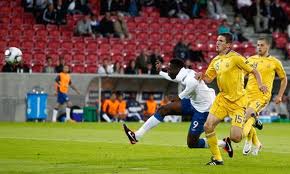 Young Engerland and Ukraine demonstrate the 100m Kick n Run qualifiers. The ball is the black and white round thing. Like Spain, the Swiss international team has developed its own distinctive style which it has applied throughout the varying age levels. Admittedly where Spain have embraced the beautiful and successful tiki-taka, pass and move, play the ball, buccaneering style that has made them World, European and Acclaim Champions, the Swiss have made defensive obduracy their metiér. They may not score very many (one goal in two World Cups), but they don’t concede many either (none at all in World Cup 2006, that’s none, zero, nada). On the negative side, and it’s a huge negative, they are by some way one of the two most tedious international sides to watch, the other being the team out front, Ukraine. It’s well known that Switzerland and Ukraine played out the single worst ’round of 16′ matches in the 2006 World Cup. A World Cup Round of 16 match where both teams appeared to be playing for a 0-0 draw and penalties from the start. What message does that send? The terrifying thought is that Young Engerland are becoming not the new Spain, all lovely interlinking passing, game control and goal threat, but the new Switzerland, a decent defence and impotent, hoofball attack. And that, frankly, this is the best we can hope for. All that talent, so little application. Sheeeeeet Does, Indeed, Roll Downhill [pullthis]Apparently Passionate Young Engerland manager Stuart Pearce felt after the Spain match that ‘if Engerland had 60% of the ball, we’d be winning matches 4 or 5-nil’. Well Pearcey, apparently Young Engerland did get 60% possession here and it didn’t quite work out the way you thought it would.[/pullthis] Young Engerland were, if anything, more frightened, paralysed and incompetent on the ball than they were against Spain only four days ago. [pullshow]Once again, you have to wonder just what exactly Pearce and his team do to players who, individually, have proven to display reasonable amounts of technical and on-pitch skills. What is it about Engerland and Young Engerland’s big tournament preparation that so thoroughly separates young men from their talents? What is it that separates managers and tacticians from any significant event that has taken place since the Scottish and Hungarian trainers took football to South America in the 1930s? Sure they toy with radical developments like 4-3-3 formations (if only to pay homage to Sir Alf’s wingless wonders) for the first five minutes, but they immediately default to the utter tedium of the safety first 4-5-1 once they cede their first possession to their opponents. Young Engerland are so retarded that they think ‘isolated striker’ is a tactical innovation on a par with ‘false no 9s’ as played by Lionel Messi. Which is to say that an isolated, played out of the game no 9 à la Shearer or, better yet, Heskey is in any way comparable to a gamechanging, world-beating, deep-dropping forward like Messi. They seem to believe that they will gain some kind of competitive advantage by actually lopping off the tip of the team spear. Not that the team actually manages to get the ball up to the ‘isolated striker’ that often. For, defence aside, Young Engerland were simply woeful. Midfielders like £20 million man Jordan Henderson and Jack Rodwell seemed utterly bypassed by the game, incapable of seizing the ball and dominating the midfield. Indeed neither of them seemed to even want the ball, let alone be able to do anything with it should they be unfortunate enough to actually gain possession. As for defender turned midfielder (and captain) Mancienne, he seemed like he was several divisions beyond his depth. The best thing I can say about him is to applaud his decision to move to Hamburg and hope life in the German league improves his play. Where Is The Problem? One thing we learned from the last World Cup is that tournament football is a completely different animal to qualification. Both Young Engerland and Engerland seem to have the art of qualification sorted, which in itself is no mean feat given that the 2009 Under-21 champions, Germany, didn’t even qualify for this Championship. What we haven’t got to grips with in any coherent way is the challenges of tournament football. This could simply be because at tournament level you’re playing better sides (Engerland usually being the top seed in any qualifying group) and it’s pretty well proven that both Young Engerland and Engerland struggle with better sides in friendlies. Or it could be something to do with the 4 – 5 high pressure games played once every three or four days. We need to find some way to allow Young England players to shed the fear they obviously feel so they can actually take responsibility and actually play the ball. Sure they’ll make mistakes, but then I believe Messi made mistakes and lost the ball during the Champions League final and that, get this, Xavi doesn’t have a 100% pass completion rate. But they understand how to work together to correct their mistakes and take the game to the opposition. Too often Engerland players seem to be so afraid of the ball that they’d rather not have it, so risk averse they’d rather not make any kind of move. Oh and Ukraine? Every bit as disappointing as their full side. |
| Jun 13 |
What We Learned From Young Engerland vs Spain (1-1)In The Eyes Of Their Fathers And so another generation begins its great descent into oblivion. How so much potential talent can be transformed into something as godawful as this is something of a mystery, if not a complete surprise. If the full Engerland team’s recent performance against Switzerland was turgid, unimaginative garbage, then this was the youthful wellspring of rot, the place where the decaying filth that is Engerland’s tactical play originates. Young Engerland, quite simply, are the stinking antithesis of football. And it’s a foul stench they exude. It’s a mystery what happens in those few days the Engerland team members are corralled together before big games. And it’s impressive. [pullthis]Players enter with talent and ambition and only days later are transformed into Automatons of Hoof, fundamentally incapable of controlling, passing or using the ball in any coherent manner[/pullthis]. What is it that the backroom staff do to so successfully amputate all vestiges of skill or technique? No one seems to know. What is clear is that they are stunningly effective. The likes of Sturridge, Welbeck, Cleverley, Henderson and Smalling, all players who have at least vaguely impressed in the Prem over the last year, were reduced to lumbering, incompetent hulks seemingly incapable of any action beyond dire hoof n hope ballplay. [pullshow]Spain, in contrast, seem to have it all sorted. After decades of being the ‘Golden Generation That Couldn’t’ they now appear incapable of playing anything other than gobsmacking possession play. Like Barcelona in the Champions League final, they made their opposition look tired, ineffective and thoroughly ordinary. After a brief, 10 minute sounding out period at the start of the game, where Engerland concentrated on getting their barrage range right, Spain exerted an iron grip on proceedings, controlling the midfield and thus the game. In the rare moments when Engerland’s defence had the ball, they were mercilessly harried and prevented from attempting any kind of serious possession. The only reason Spain didn’t have things locked down in their own third was the ball was so seldom there. Recent Arsenal performances aside, rarely can a team have had such control and yet been so incapable of taking advantage. Dirty Cheating Bastards  Dirty Cheating Herrera Ander - The new face of Spanish football? After all that possession and beautiful interplay, it was a shame to say the least that Spain’s goal should be scored with a handball. And a blatant one at that. What is it about talented sides (and individuals) that makes them believe that this is in any way justified? How can Herrera Ander look at himself when it’s patently obvious that he is a total cheat? And if the likes of Rooney can get banned for swearing and Kolo Touré can be banned for taking supplements (both good bans in my book), how is it that blatent cheats like Herrera Ander can survive in this game? The Spanish should be so ashamed of players like him they should a) refuse to accept the points from the game and, b) never play Herrera Ander again. In the same way that Busquet’s pathetic diving and playacting diminishes his own and Barcelona’s achievements, so this demeans everything Spain have done to promote total football. Say it again. Dirty Cheating Bastards. All That Cheating Won’t Save Engerland Perhaps the saddest thing of all is that Spain really didn’t need to cheat. They really, really don’t. But once they had, you sensed that they felt that they had done enough. They were comfortably in control of the game, with tons of possession and had reduced Engerland to such a degree that they were essentially insignificant. And surely that was it, game over. Like the full Spanish side, they didn’t manage to make their dominance stick, but you felt they didn’t really see the point of exerting themselves to get more goals. Sure they had attempts, but they didn’t manage to break the Engerland defence apart the way Barcelona did Man U’s. And, in not grabbing the game, they let Engerland back in. And maybe, just maybe, that was justice done. Engerland managed to get a goal from one of their few (very, very few) coherent moves and Spain get punished (a bit) for being dirty cheating bastards. But make no mistake, a point for Engerland should in no way disguise the multitude of failures that they displayed in this match. Their mirroring of the full Engerland side’s many, many deficiencies should be a stinging reminder of the depths of the fault lines facing the English game. Our top young players cannot control the ball, can’t pass, can’t create and seem scared and paralysed in the face of genuinely decent opposition. Until these issues are addressed, none of the Engerland sides will be doing anything remarkable anytime soon. Because, good though they are, Spain aren’t apparently the best young side in Europe. Apparently they aren’t even the best young side in this group. Meanwhile, Young Engerland, despite being no 1 in the UEFA rankings, are comfortably the worst side in this group based on this showing. Be afraid. Be very, very afraid. |
| Jun 06 |
What We Learned From Engerland vs Switzerland (2-2) The three testicalled scrotum that is the Euro 2012 logo. Two countries separated by football. That Blockage Is Back Sadly for Englerland, they seem to have become the last bastion of the sclerosis that is slowly being purged from the Prem. It’s the same as it ever was, nothing is moving. Certainly not the players who are slowly but surely fading into obscurity, the so-called Golden Generation of Terry, Ferdinand and Lampard, who’ve done nothing and won nothing, don’t look like doing anything to surprise us (except retire) in the future. Certainly not the tactics, which seem as comprehensively stuck in the pre-1960 era of physical supremacy on unplayable pitches as ever. Yes this Engerland team is as constipated as ever. What Do You Call A Person Who Keeps Trying The Same Failing Strategy While Expecting A Different Result? Aside From Stupid Obviously [pullthis]”You in England,” said Barcelona’s Helenio Herrera, “are playing in the style we continentals used so many years ago, with much physical strength, but no method, no technique.“[/pullthis] Admittedly he did say this in 1960 and so has come in a bit late to the party, but he does have a point.
Last month has seen 3 serious matches at Wembley, a turgid FA Cup Final, a brilliant Champions League Final and this Euro 2012 Qualifier. Of these, this was by far the worst, the least watchable, the least tactically aware and the least entertaining. And while Barcelona played such spectacular football they made Man U look like Stoke and Stoke were ground down by the Man City mincer, England were simply impaled on their own failings against a Swiss side that barely look capable of beating anyone yet were 2-0 up before half time. Engerland Are Hamstrung By Two Factors. [pullshow]First, the English style of kick n run/hoof and hope football is stunningly inefficient, hopelessly outdated and far too easy to beat. It encourages players to almost shun possession, rewarding those who get rid of the ball early, while punishing those who show any desire to hold the ball or competence in control. It might be vaguely acceptable as a style of play if it occasionally worked, but it’s safe to say that the most Engerland gained from any hoof was a Swiss throw in on their 20 yard line. Not one move of any significance resulted from this oafish play. Sure we might marvel that Terry or Ferdinand has the ability to artfully lob a ball 40+ yards over the shoulder of a lumbering teammate and cede possession to the Swiss, but it’s kind of a futile appreciation. Indeed both Engerland’s goals and all their scoring opportunities were the result of moves where the ball was largely passed on the ground. In this way Engerland repeated the same tactical flaws that cost Man U and Stoke their matches – a wide midfield that was largely bypassed by long, aimless balls punted upfield to heavily marked and isolated strikers, who were unable to receive the ball and immediately sacrificed possession. It’s safe to say that Switzerland were never troubled with the ball over the head of the defence. Second it’s clear that the Prem (or the hoof n hope style it imposes) takes it’s toll out of players far more than other leagues. None of the English players looked fit or in form and the overwhelming impression was of a bunch of overworked, exhausted carthorses who fundamentally couldn’t keep it up for one last 90 minutes. It’s hard to tell whether this is a failing of the English physique or the Prem, seeing as all the Engerland players play in the Prem, while only the Swiss central defence of Djourou and Senderos do. And while the latter were poor, they didn’t really have a lot to cope with. Now, being positive, it’s good that we’ve identified (confirmed?) these flaws, not least because they are fundamentally fixable. Although there is no clear evidence that they will actually be addressed. But it’s clear that nothing will change until they are. Hell No, We Won’t Go (For Change) And it’s strange that there should be such reluctance to change. After all Engerland’s only significant win, the 1966 World Cup, came after Engerland adapted their tactical style from a 4-2-4 to a 4-3-3, bringing the concept of Ramsey’s wingless wonders into play. Our refusal since then to adapt from the 4-4-2 that almost none of the players use in their club sides is dogmatic in the extreme. Our ridiculous justification of retaining the hoof n hope style, namely that we don’t have players capable of playing any other way, becomes a self-fulfilling prophecy. What’s really scary is that we keep playing this way even though it’s yielding increasingly bad results. I don’t see how you can realistically blame Capello for this. I don’t think he has beaten a lack of ability on the ball into these players (or if he has one can only admire his effectiveness given the limited time he has to work with them). Nor can he be blamed for the lack of individual skill or imagination in the side. Poor first touches, bad decision making, an inability to control or pass the ball accurately, a desire to ‘get rid’ as soon as possible, none of this is Capello’s fault. Failure on this scale takes years of training to accomplish. Where he does fall down is in trying to give the side an idea of how to attack or defend, you got the sense that no one in the Engerland team had a clear idea of how they were going to attack the Swiss. Or if there was an idea, it was the exceptionally bad one of lobbing the ball to Milner and somehow expecting something to happen other than giving possession to the Swiss. Admittedly that’s what Man U tried against Barcelona, but they at least had the hope that Valencia would be able to control then cross the ball. Only Baines and Wilshire actually ever ran at the Swiss in a convincing, potentially dangerous way, and it was no surprise that Engerland’s goals should come from a penalty awarded after Wilshire ran into the box and a nice chip (admittedly by Milner) after a run down the left wing. Aside from this only Walcott seemed to take the Swiss on and sadly he has become a byword for ineffectiveness and non-delivery. The Guilty And The Damned Aside from a lack of a clear, compelling vision of how to beat the Swiss, Engerland’s other failings are legion. Darren Bent, like Man U’s Hernandez and Stoke’s Kenwynne Jones before him, was isolated and impotent as a lone striker trapped half a pitch away from his nearest teammate, although in his case he was played out of the game by some of the most successful graduates of the Arsenal defensive academy rather than the best Barelona can offer. So obviously he had some chances, the two most blatant of which came from balls passed or richoceted to him along the ground. His inability to score open goals really is impressive. On this display even Carlton Cole has a chance of an Engerland callup. Walcott patently isn’t a winger. It’s not clear what he is, in his moment he can be devastating, but he’s no wingman. He seemed to offer no real threat and you can understand why Capello isn’t entirely sold on him. His defensive duties covering for the useless Glen Johnson also limit his forward progress, but he’s fundamentally toothless. Milner’s not a winger either, neither is he blessed with pace nor ability on the ball. So, aside from providing an ample target for Terry and Ferdinand to lob balls at, it’s hard to see what his role on the right is suppose to be. Having both Walcott and Milner playing wide effectively gave the midfield to the Swiss. Engerland’s midfield, meanwhile, is a total mess. Lampard was so ineffective he must be fast running out of arguments for his inclusion. Currently he seems to be there simply because the ancient Lampard/Gerrard dilemma seems to fester in people’s minds and Gerrard is now injured. There must be other midfielders from the under-21s who can step up to this level. It’s easy to see why his goalscoring seems to have fallen off a cliff. How Scott Parker managed to win the Player of the Year award is a total mystery. He seems to have slipped into that moment in time which was after Nasri stopped doing cool stuff and before Dirty Suarez arrived at Loserpool. Admittedly it was a very, very short moment so big ups for seizing the day and all, but Player of the Year Parker is not. His one trick, a kind of groovy 360 degree shuffle with the ball that retains possession while leaving the player dizzy and confused, while funny to watch isn’t going to make it onto the training grounds of Stoke, let alone Barcelona. Didn’t so much shit on his copybook as rip the whole thing up and stuff it into the bin. Jack Wilshire, new boy on the block, illustrates everything that is good and bad about Engerland. On the plus side, he’s got great technique (we’ll soon beat that out of him I suppose) and drive. He made the only genuinely dangerous penetrating run into the Swiss penalty area. And, amazingly enough, he still wants the ball. On the negative side, he looked tired and was booked for one of those classic ‘I’ve lost the ball, so I’d better leap at it at knee height’ tackles that encourages fans to mistake ‘dangerous and stupid’ for ‘passionate’. Still the only member of the midfield whose name should be on the teamsheet. And if our midfield is a mess, our defence is simply decrepit. Ashley Cole looks like this season has gone on for a month too long, and for him the 15 minutes he played were 15 minutes too much as he succumbed to an inevitable exhaustion-related injury. He’s still a great left back and it’s good that he’s finally got some serious competition in Baines and Gibbs. Terry and Ferdinand are starting to look their age, an increasingly crumbling defensive pairing. If genuine threat starts at the back then these two have to go as neither seems capable of initiating a real life counterattack other than by hoofing the ball to a striker who is 40 yards from his nearest teammate. Now unless you are Chile’s Salas from back in the day, that’s not a real recipe for a goalscoring opportunity at Wembley. It was telling that Bent’s only one on one with the keeper came from a through ball played on the ground by Wilshire. As for Glenda Johnson, it seems improbable that there isn’t a better English right back. He doesn’t defend well, drags Walcott back into his own half, can’t pass and ultimately contributes nothing to the team. Surely, surely he is going to be dumped soon. On The Plus Side Montenegro, who bizarrely are England’s only serious challenger in this group, also drew. This means Engerland’s fate is still in their own hands. Win their next three matches, away to Bulgaria, at home to Wales and away to Montenegro and they’ve qualified. And that is probably the most shocking thing about this whole sorry episode. |
| Jun 01 |
That Was The Prem 2010-11 That WasSclerosis – Pass Me The Enema Bag Stupid The whole season, whether in football or society in general, seems to have been about finally purging oneself of that gargantuan blockage. Whether it was the sight of FIFA suddenly realising that not only did the emperor have no clothes, but that he was also a corrupt venal old fartbag, or the entire North African Middle East rising up against, er, a legion of corrupt venal old fartbags, or SKY finally moving past the anal lads culture entrenched by the likes of (venal old fartbags) Keys and Gray this felt like a watershed period. The end of an era. On a football level, the season felt like a continuation of the malaise offered by the World Cup before working its way up to being something of a watershed moment. Man U (always ahead of the curve) began the umpteenth process of regeneration, with the Hernandez/Valencia/Rooney forward axis only being stifled by the long term injury to Valencia early in the season. The retirements of Neville (seamlessly eased out by the Fabio/Raphael twins) and Scholes, reinforced both the demise of the early 2000’s team and the transitional nature of the season. Man City continued their permanent revolution, establishing themselves as a top four team, while teams like Liverpool, Chelsea et al began the process of dispensing with tired, older (dare we say more expensive?) players like Gerrard, Lampard, Carragher etc. Meanwhile we watched the decline of the likes of Essien, Mikkel, Cech, Defoe, Crouch and the entire Man U midfield. With all this decline and precious little improvement or additional excitement (at least until the import of Champion Cheat Dirty Suarez in January), this felt like a season of removal. Get Stuck In! It’s All About The Defence Stupid Strangely for a league that seems to be all about goals, good, solid defences seemed to be the key to success. Teams with poor defences (hello Arsenal, Blackpool and West Ham to name but three) lost out big time. Admittedly, Boremingham showed that a good defence in the early part of the season is no compensation for having zero teeth in attack. Unlike attacking partnerships, which can be forged relatively quickly, defences are built over time, not simply pre-season. Arsenal in particular paid the price for having no really settled back three. For them having one settled member of the keeper/central defence axis would be an improvement. It’s clear that there are far too many journeyman defenders in the Prem. These are players capable of muscling opponents off the ball, obstructing them or failing that injuring them, but who are fundamentally unable to actually tackle properly. This was typified by the succession of ‘horror’ tackles early in the season which robbed the Prem of the likes of Zamora, Ben Haim, Jones and Valencia for large parts of the season. Certainly the English obsession with ‘physical’ football is a massive detriment to both the Prem and English football in general. The Prem needs to decide which it wants to protect, the old skool physical ‘get stuck in’ defensive mindset or creative skillful players. There’s little evidence to suggest that they will get this one right. It’s clear that there are far too few good defensive coaches, and those who are perceived as the most ‘successful’ are promoting a hideous basketball inspired style typified by obstruction, holding and intimidation that might work in the Prem but which is heavily penalised in Europe (just compare Mau U’s foul rate to that of Barcelona in the Champions League final and consider that Barcelona seemed like the better defensive side). I’d rather players were taught how to defend legitimately rather than encouraged to ‘get stuck in’, but there seem to be no effective defensive coaches in the Prem. As their progress in Europe and the Champions League final in particular demonstrated, Barcelona for all their diving and playacting are still a better, more effective defensive playing team than practically anyone in the Prem. Consider their record against Arsenal and Man U and how few shots either had in three matches. Too few Prem players know how to defend at all or get the ball back when the opposing side has it. Goals Win Games No coincidence that once again the winner of the Golden Boot should come from the Champions (Berbatov) and the most industrious tyro in the league (Tevez). Van Persie’s 18 goals in 25 games kept Arsenal in the big four, without them it’s doubtful they’d even be playing in the Europa League. Boremingham and West Ham’s lack of bite led them to inevitable relegation. There’s Bargains In Those January Sales Normally January is a time for two kinds of transfer, the ‘save us from relegation’ panic buy and the ‘building for next season’ bargain, neither of which usually leads to anything approaching an immediate impact. This season, however, it felt like the January transfer window began the process of transition, removing the logjam of the past 4 or 5 seasons. Liverpool’s season was transformed by the arrival of Champion Cheat Dirty Suarez, who brought much needed goal threat and inspiration. Without him they maintained their appalling form and playing style in the Europa League. Only time will tell if Andy Carroll and Torres were good January signings, but they both seem to have been ‘building for next season’ purchases. Arsenal’s dramatic slump in form illustrates the need for occasional surgical strikes in midseason. The Importance Of Key Players (And Keeping Them Fit) Arsenal’s progress was undone by Vermaelen’s season long absence – he’s played fewer games than notable crock-master Ledley King, who as every fule kno has only the one knee. Arsenal badly needed both a serious defender and some kind of leader and Vermaelen was a possibility. They were also undone by Van Persie missing the first half of the season. You sense that if only Van Persie managed to play an entire season he’d be the league’s top goalscorer (although his run of scoring in 9 consecutive away matches did coincide with Arsenal’s worst run of form for a number of years). When Arsenal were winning the Prem and challenging, Thierry Henry was regularly the Golden Boot winner. Fulham weren’t helped by the assault on leading scorer Bobby Zamora. Their form notably picked up dramatically once he returned. Birmingham might have gone to sleep having been gifted the Carling Cup, but the injury to Scott Dan in December (in their Carling Cup semi final) was every bit as effective in their slide down to the Championship. West Ham lost Hilzlesperger to an international injury for most of the season, then, when he came back, they lost Scott Parker. Carlton Cole’s season long fitness streak was no consolation. Man U didn’t look likely to win games, much less the Prem until Vidic and Valencia regained their fitness. Tottenham haven’t looked good since Bale first did his hamstring over the winter. Van Der Vaart’s injuries helped eliminate any threat of a Top Four finish. Chelsea usually get 40 – 50 goals a season from Drogba and Lampard. This season they’ve got around half that. Lampard, like Gerrard, is hitting that stage in his career where he’s more often injured than fit. Drogba added to his repertoire by catching malaria. Man City weren’t the same team without Tevez. Liverpool weren’t the same team without Torres (the exception that proves the rule perhaps?). But they were still terrible without Suarez. I’ve Got The Sweetest World Cup Hangover I can’t think of a single Prem player who came back from the World Cup and had a good start to the season. For some the malaise lasted well into the season, others still haven’t recovered
Bad Foot Rising (Studs Up) This season has seen the continued rise of the American football/basketball style defence, holding, manhandling, shoving, obstructing seen as an ‘acceptable’ alternative to real defending. The legacy of Fat Sam and Tony Pulis, who seem to have totally misunderstood the concept of turnover. Genuine Class Conspicuous By Its Absence. Flattered to deceive –
Genuinely class
Good fucking riddance to
Just think, the three relegated teams are being replaced by teams who’ve played consistently good football in the Championship. |