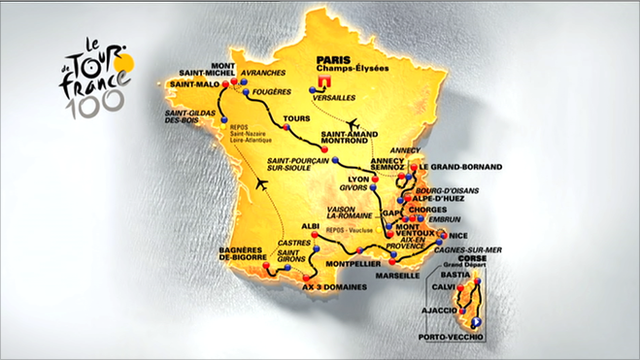
Less a circle than a strangely designed @ symbol, the 2013 route has been a masterpiece so far…
This Is Offensive Sport
The tediousness of the 2013 Prem season aside, this has been something of a watershed year for sport. You can almost feel the barriers coming down and there’s a real sense of the old guard/old systems being superseded by the brash new kids. For me the most obvious sign has been the refusal of lesser players to be cowed and the rise of offensive play. The most perfect example of this being Bayern Munich taking the game to Barcelona and crushing them in the process, but you could also see it in the strategies employed by teams like Tahiti, Japan and Brazil in the recent, excellent Confederations Cup.
In essence it’s a reaction at the consistent dominance of the big players. Faced with what appear to be fait accomplis, the smaller, supposedly weaker teams have recognised that there’s little point in simply playing the defensive game, hoping your opponents crumble and somehow let you into the game. Instead they have taken the game to their opponents, surprising them in the process.
Sure it doesn’t always work. Both Tahiti and Japan crashed and burnt, losing all their matches and being roundly spanked in the process, but it really worked for a Brazil team that had looked distinctly average when playing against Engerland only a fortnight before their Confederations Cup final against Spain. Their desire to attack meant they scored vital early goals which changed the complexion of their games and won them the Cup.
This Is An Offensive Tour
Cycling has had a similar epiphany. Faced with the apparent dominance of Sky, other teams and riders have have to adapt to have any chance of winning. Right from the off this Tour has been offensive. Even the route has been unsettling. Riders have had to compete right from the start, without the usual bedding-in time trial that would give the also-rans a comfortable, breakaway legitimising deficit from the word go.